My First FAM Trip: Finding the History Running Through San Antonio
I knew San Antonio had history before I ever landed there.
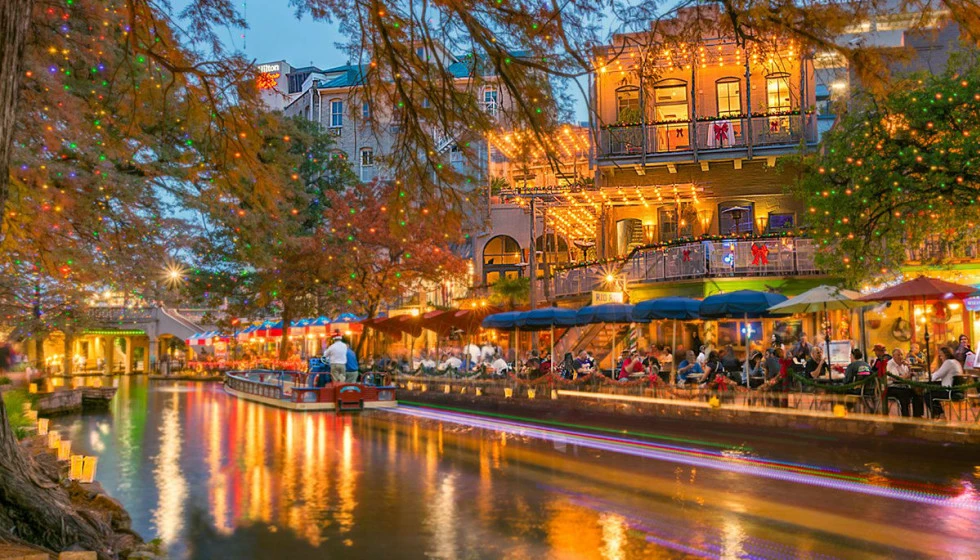
Everyone knows the Alamo. Even if you've never set foot in Texas, there's probably a picture of that limestone front tucked somewhere in your head. I'd seen the River Walk too, or at least the postcard version: cafe tables beside green water, stone bridges overhead, a boat sliding underneath.
Knowing those images and actually spending time in the city turned out to be two very different things.
This was also my first FAM trip, so I arrived trying to learn two things at once. I wanted to get to know San Antonio. I was also learning how a travel advisor is supposed to look at a place when they're there for work.
That second part changes how you travel. I still wanted to enjoy myself, but I kept catching myself noticing things I'd normally walk right past. How long does it take to get from here to there? Is this a family stop or a couples stop? Is it worth an hour, an afternoon, or five minutes and a photo? Would someone with a cane or a walker manage this path? Is this the place I'd tell a client they have to make time for?
San Antonio gave me plenty of chances to answer those questions. It also reminded me why being there still matters.
You can research a destination for hours and know a remarkable amount about it. Research can't hand you the feeling of walking beside the river at dusk, glancing up, and remembering an entire city is still moving one storey above your head. It can't give you the scale of the Alamo when you finally see it. And it definitely can't prepare you for standing in Main Plaza after dark while three hundred years of history wash across the front of a cathedral.
Those are the moments I came home with.
So, what is a FAM trip?
FAM is short for familiarization trip. It's a trip arranged so travel professionals can experience the hotels, attractions, restaurants and tours they'll eventually recommend to clients.
I knew the definition before I left. I understood the point once I was on one.
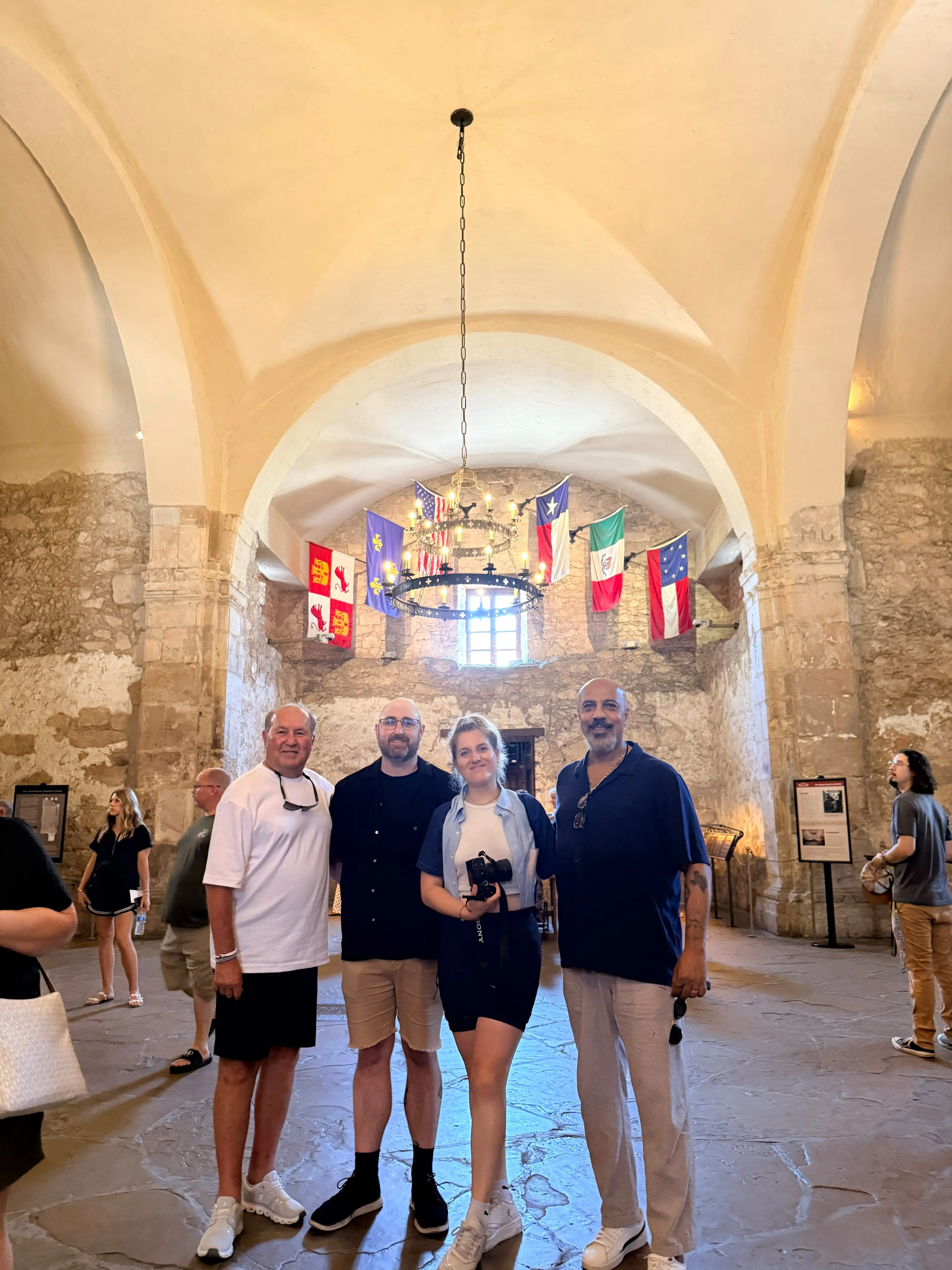
A FAM is busy. One minute you're walking through a historic site, the next you're picturing a client who'd love it. You're sitting in on presentations, touring properties, asking questions, snapping photos, scribbling notes, meeting people, and trying to guess which details will still matter once you're home.
And through all of it, you're still a traveller. You still notice the view. You still get hungry. Your feet still hurt. You still drift toward something just because it looks interesting.
That balance was the biggest adjustment for me. I had to let myself experience San Antonio as me, while also seeing it through the eyes of someone who'll have to explain it to somebody else.
A hotel website can tell me how many rooms a property has. Google can tell me the distance between two attractions. A tourism site can tell me the opening hours.
Being there answers different questions. Does this place feel worth the trip? Who would I send here? Would I come back?
You won't find those answers on a webpage.
The Alamo feels different when you're standing in front of it
The Alamo was always going to be a headline stop for me.
It started life in 1718 as Mission San Antonio de Valero, more than a century before the 1836 battle that made its name famous. So the site carries roughly three hundred years of story, and the battle is only one chapter of it.
What surprised me most was where it sits.
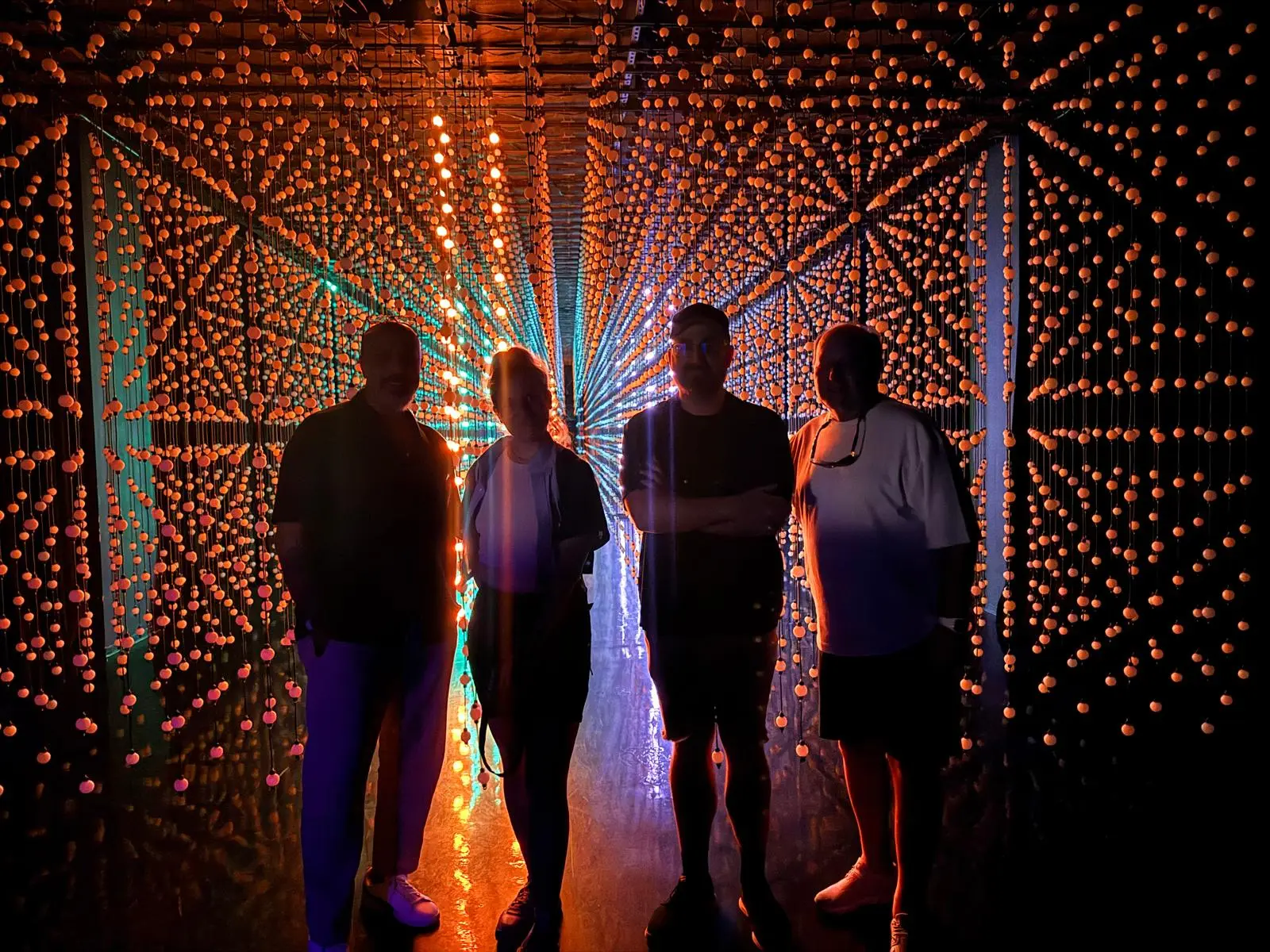
I think some famous places get so big in our imaginations that we picture them standing alone, sealed off in their own little world. The Alamo isn't like that. You're walking through downtown San Antonio, past hotels and shops and traffic, and suddenly there it is.
That closeness makes the history feel less distant, not more. I'd seen the photos. I knew the basic story from books, movies and TV long before I knew anything about the city around it. None of that prepared me for the actual scale of the church, or for how strange it feels to stand somewhere you've "known" your whole life without ever being there.
Then you walk out of the grounds and the city just keeps going.
For advisors:
- It's free, but book ahead.Admission is free, but you need a free timed-entry ticket to go inside the church. Have clients reserve it before they arrive, especially in busy seasons.
- Don't sell it as a photo stop. Plan on one to two hours for a self-guided visit, longer with a guided tour. The grounds include the church, the Long Barrack, the gardens and a living history encampment.
- Upsell the paid exhibit for history lovers. The Ralston Family Collections Center holds artifacts including the Phil Collins collection, and there's a ticketed 45-minute guided tour.
- Manage expectations around construction. The big new Alamo Visitor Center and Museum across the plaza is now slated for spring 2028, after earlier target dates slipped. Expect some construction around the plaza until then.
- Go early in summer. Most of the site is outdoors, and Texas heat is real.
The other missions were the surprise of the trip
Here's something I didn't fully appreciate before I went: the Alamo is just one of five Spanish colonial missions in San Antonio.
The other four, Concepción, San José, San Juan and Espada, sit south of downtown and make up San Antonio Missions National Historical Park. Together with the Alamo, they became the first UNESCO World Heritage Site in Texas.
If the Alamo is the famous name, the missions are where the bigger story finally clicked for me. These weren't just churches. They were whole communities, with Indigenous families living and working inside the walls, farming the land around them, and moving water through hand-dug irrigation channels.
Each one has its own personality:
- Mission San José is the "Queen of the Missions," the largest and most complete. It's also home to the park's main visitor center, so it's the natural place to start.
- Mission Concepción has a striking stone church that's remarkably well preserved. Look up and you can still see traces of the painted designs that once covered the walls.
- Mission San Juan is smaller and quieter. It was the agricultural heart of the system.
- Mission Espada is the southernmost, and nearby is the Espada Aqueduct, a piece of 1700s engineering that still carries water today.
What struck me was how alive they still feel. The mission churches are still active Catholic parishes, so you might walk in on a choir rehearsal or a wedding. It's a living place, not a museum behind glass.
For advisors:
- It's free.There's no admission charge and no reservation needed, and each site has free parking.
- Start at San José. Clients can catch the park film at the visitor center and join a daily ranger-led tour (about 45 minutes to an hour, per the National Park Service).
- Budget half a day. A rough guide is 1.5 to 2 hours at San José and about 30 minutes at each of the others. A car or a guided tour is easiest; active clients can bike the Mission Reach trail instead.
- Churches can close without notice for services, weddings and funerals. Build in flexibility.
- Accessibility: the main sites are partially wheelchair accessible, and wheelchairs can be borrowed at each one. Some ground is uneven.
- Who it's for: history lovers, photographers, faith-based travellers, and anyone who wants the context the Alamo alone doesn't give.
The River Walk is bigger than the postcards
I underestimated the River Walk.
I thought I knew what it was because I'd seen so many pictures. I didn't. The photos always show the prettiest bend: patios by the water, a boat drifting past, a stone bridge, a few cypress trees. They don't show how much the river shapes the whole experience of downtown.
You're walking along an ordinary city street, you take a staircase down toward the water, and everything shifts. The noise drops. The pace slows. The buildings are still there, but you're seeing them from below, with restaurants and hotels opening onto the river and bridges passing overhead.
Then you climb back up and you're in the city again. That little separation is what gives the River Walk its personality.
It's also much longer than most people realize. The whole thing runs about 15 miles, in three sections. The busy downtown loop is the one everyone pictures. The Museum Reach heads north toward the San Antonio Museum of Art and the Pearl. The Mission Reach heads south, quieter and greener, out to the missions.
Before this trip, I'd have described the River Walk as "an attraction." Now I think of it as the spine of downtown. You can eat, wander, pop up to see something nearby, and find your way back down without ever needing a car. When so much of travel is car ride, parking lot, scheduled block, repeat, that's a real gift.
Take the boat first
If I could give one piece of advice, it's this: take the boat tour early in the trip.
The GO RIO narrated cruise is 35 minutes on a quiet electric barge, and the guide points out things you'd walk right past. I learned that La Villita was the city's first neighbourhood, and that the Hyatt was designed so it wouldn't cast a shadow on the Alamo at sunset. It's part history lesson, part orientation, and the breeze on the water is very welcome on a hot afternoon.
After the boat, the River Walk made sense to me. I knew where things were, and I spent the rest of the trip recognizing buildings from a completely different angle.
For advisors:
- The walk itself is free. It's a public park.
- Boat basics: GO RIO runs daily from 10 a.m. to 10 p.m. Cruises leave roughly every 15 to 20 minutes from several boarding spots, including Rivercenter. They also offer dinner cruises and private charters, which are great for celebrations and groups.
- Strollers stay on shore. They're not allowed on the boats, but there's a spot to leave them by the ticket window.
- Rain can cancel cruises, so don't schedule the boat as the only plan for a client's last day.
- Riverside restaurants vary. A patio on the water gives any restaurant instant atmosphere, but prices run high and quality is uneven. Send clients to proven spots (see the food section below).
- Holiday travel: the River Walk lights up for the holiday season, which makes November and December a lovely sell for couples and families.
I came for the history. I'd go back for the food.
I need to be honest: some of my favourite memories of San Antonio happened at a table.
This city takes Mexican and Tex-Mex food seriously, and it shows. I had sizzling fajitas, enchiladas smothered in sauce, chips and salsa that never stopped coming, and more than one margarita I'm still thinking about. The food here isn't a side note to the history. It is history, a straight line back through generations of Tejano and Mexican families who built this city.
What I loved was the range. One meal felt like a family party, loud and colourful with mariachis wandering between tables. The next was a chef's take on Mexican street food that I'd happily fly back for.
Here are the places I'd point a client toward:
| Restaurant | Area | Why send clients |
|---|---|---|
| Mi Tierra Café y Panadería | Market Square | A San Antonio institution since 1941, open 24 hours, with a full Mexican bakery. Go for the atmosphere and leave with pan dulce. |
| La Gloria | The Pearl | Chef Johnny Hernandez's Mexican street food on the river. Order a bunch of plates and share. |
| Rosario's | Southtown | Regularly voted among the city's best Mexican restaurants. Lively and fun for groups. |
| La Fonda on Main | Monte Vista | A long-running local favourite for traditional dishes like mole. |
| Casa Rio | Downtown River Walk | The classic riverside Tex-Mex experience, colourful umbrellas and all. |
For advisors:
- Pair food with sightseeing. Mi Tierra fits neatly with a wander through Market Square. La Gloria pairs with an afternoon at the Pearl.
- The Pearl is worth a half day. This former brewery is now a lively district of restaurants, shops and a weekend farmers market, and it's walkable from downtown along the Museum Reach.
- Reserve for groups, especially on weekends and at riverside patios.
- Ask about dietary needs early. Tex-Mex leans heavily on cheese, pork lard and fried tortillas, so clients with restrictions will want guidance.
San Antonio | The Saga is the moment that stayed with me
One of my favourite experiences of the whole trip happened after dark.
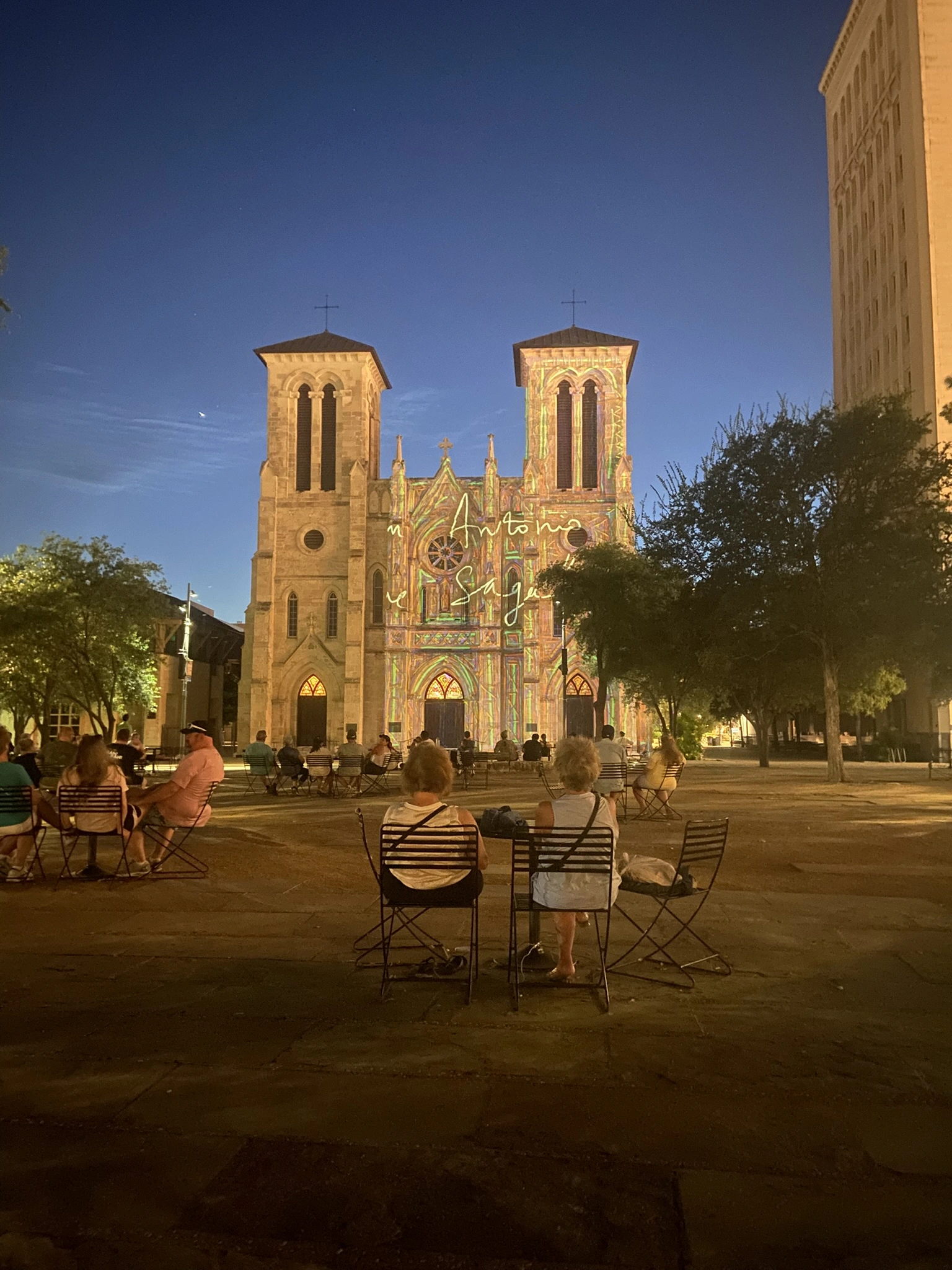
San Fernando Cathedral sits on Main Plaza in the middle of downtown. At night, its front becomes the screen for San Antonio | The Saga, a huge projection by French artist Xavier de Richemont that tells the story of the city through music and moving images.
I know that sounds like "a light show." It isn't, really. Not when you're standing there.
The cathedral already carries centuries of history on its own. Then the whole building disappears under colour, faces, architecture and music, moving through different chapters of San Antonio's past. People gather in the plaza, some on benches, some sitting right on the ground, and everyone watches the façade transform. There's no narration, just image and sound, and somehow that makes it hit harder.
Earlier that day I'd been standing at the Alamo. I'd walked along the river. Now I was outside in the warm night watching another historic building tell the story.
That was the moment San Antonio came together for me. Not as a list of famous places, but as a city that's comfortable letting its past stay visible. The history doesn't clock out when the museums close. You keep running into it.
For advisors:
- It's free and shown rain or shine.
- Check the schedule before you promise it. The Main Plaza Conservancy lists showings Tuesday through Sunday at 9 p.m., but there are no shows on Mondays and there are dark dates around Easter, Fiesta and church events. Confirm current times close to travel.
- It runs about 24 minutes, covering roughly 7,000 square feet of the cathedral's façade.
- Arrive 15 to 20 minutes early to get a good spot, and bring something to sit on if clients don't want to stand.
- Make it the evening anchor. Dinner on the River Walk or at Market Square, then a short walk to Main Plaza. It's an easy, memorable night for families, couples and groups alike.
The spaces between attractions matter
FAM trips put a lot of attention on the places you're scheduled to see. What surprised me was how much I valued everything in between.
Walking from one stop to the next. Wandering back down to the river. Turning a corner and recognizing a building I'd seen from the boat that morning. Watching families and couples drift through Main Plaza in the evening.
Those in-between moments taught me more about San Antonio than checking attractions off a list ever could.
I want to remember that when I'm building itineraries. A trip needs structure, but not every hour needs an assignment. Sometimes the reason you fall for a city is that you had enough room to actually wander through it.
San Antonio rewards that. The Alamo, the River Walk, La Villita, Main Plaza and Market Square all sit close enough together that walking becomes part of the experience, not just the thing you do between experiences.
For fellow advisors: how I'd sell San Antonio
If a client asks me about San Antonio now, here's how I'd frame it: it's a walkable, affordable, history-rich city where many of the biggest sights are free, and where three full days feel generous rather than rushed.
Who I'd send
| Traveller | Why it works | Don't miss |
|---|---|---|
| History lovers | Five missions, 300 years of layered story, all close together | Alamo plus a ranger tour at Mission San José |
| Couples | Romantic river evenings, great food, easy pace | Dinner by the water, then The Saga |
| Families | Free sights, short boat ride, lots of walking without long drives | GO RIO cruise early in the trip |
| Food travellers | Deep Mexican and Tex-Mex roots, from 24-hour classics to chef-driven spots | Mi Tierra, La Gloria, the Pearl |
| Groups and celebrations | Lively restaurants, boat charters, compact downtown | A private river cruise |
| Slower or older travellers | Lots to see within a small area; boat tour saves walking | Book accessible options in advance |
How long to stay
Three nights is the sweet spot for a first visit. Two nights covers the downtown highlights. Add a fourth if clients want the Pearl, the museums or a day trip into Texas Hill Country.
When to go
- Spring and fall are the easiest sell for weather. In April, Fiesta San Antonio brings parades and parties, but also bigger crowds and higher rates. Book early.
- Summer is hot. Plan outdoor sights early in the morning and save the afternoon for the boat, museums or a long lunch.
- November and December bring holiday lights to the River Walk, which is magical for families and couples.
Where to stay
- Downtown, on or near the River Walk for first-timers. Everything in this post is walkable from there.
- The Pearl for clients who want a quieter, foodie, boutique feel, with downtown a pleasant river walk away.
A simple three-day outline
- Day 1 — Get oriented. Alamo in the morning (book the free church ticket). Lunch, then the GO RIO boat tour. Wander the River Walk and La Villita. Evening: dinner, then The Saga at Main Plaza (check it's a show night).
- Day 2 — The missions. Start at Mission San José for the film and a ranger tour, then Concepción, San Juan and Espada with its aqueduct. Afternoon rest. Evening: Mi Tierra and Market Square.
- Day 3 — The Pearl and the Museum Reach. Walk or take the boat north to the Pearl. Shop, eat at La Gloria, and visit the San Antonio Museum of Art if clients like museums. Farewell dinner on the river.
What my first FAM taught me
Beyond San Antonio itself, a few practical lessons are coming with me to the next one.
- Write it down right away. After a few site visits, presentations and meals, details blur together faster than you'd think. The thing you're sure you'll remember is often gone by bedtime.
- Take photos that answer questions. I naturally take the pretty shot. As an advisor, I also need the useful one: entrances, room layouts, ramps and stairs, menus, the view from the room, where the boat boards. Those end up mattering more than another skyline.
- Picture different travellers. Something I adore might make no sense for someone else's trip. Couples, families, solo travellers, history buffs, foodies and slower travellers all experience the same city differently.
- Protect a little wandering time. FAM schedules are full. Some of my best observations came from walking with no plan at all.
- Wear good shoes. No deep lesson here. You will walk a lot.
- Do the job, but stay curious. I was there to work, but the moments that stuck were the ones where I stopped analyzing and just enjoyed where I was.
That last one might be the most useful of all. Clients can find facts on their own. What they're really asking me for is perspective.
Coming home with more than information
I went to San Antonio to figure out what a FAM trip was. I came home understanding why being somewhere still matters so much in travel.
Now I can tell a client the River Walk is worth their time, because I know how naturally it ties downtown together. I can tell them the Alamo isn't a five-minute photo stop, and that the other four missions are where the story really opens up. I can tell them to save room for dinner. And I can tell them to check the schedule for The Saga and keep one evening free, because I know what it feels like to stand in Main Plaza and watch San Fernando Cathedral disappear beneath the story of the city.
Those recommendations mean more to me now, because they come from memory.
There's plenty of San Antonio I haven't seen yet. One trip doesn't make anyone an expert on a city with this much history. But I know it differently than I did before.
And I think that's the real value of a FAM trip.
You arrive with research. You leave with opinions. Best of all, you leave knowing exactly why you have them.
For my first one, San Antonio was a pretty great place to learn the difference.


